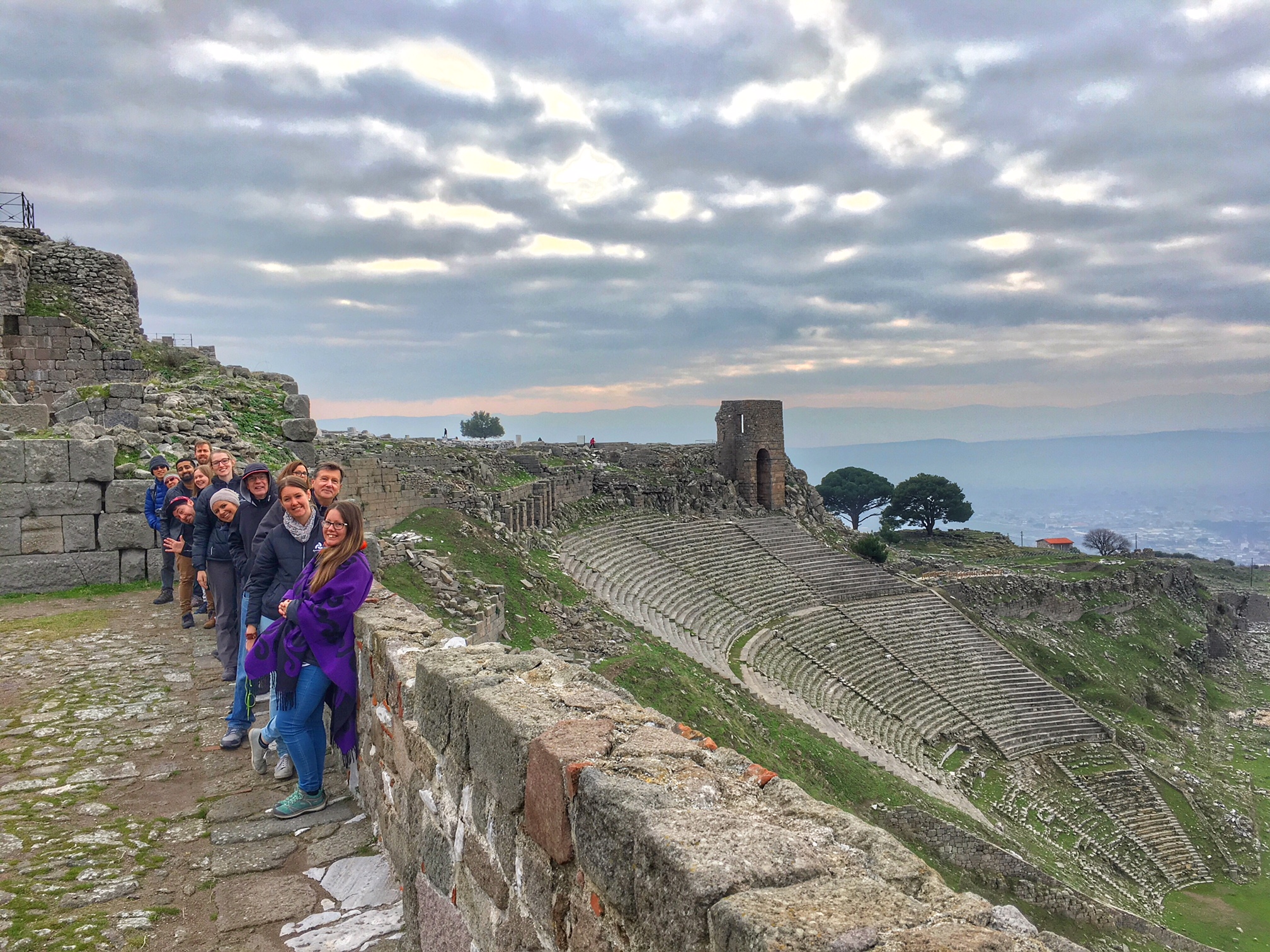
Pergamum

Pergamum Theater

The church of Pergamum (2:12–17) existed in the place where Satan had his throne. This reference probably does not refer to the altar of Zeus that sat atop the thousand-foot acropolis that towers over the lower city. Rather it refers to the city as the seat of the provincial koinon, or assembly, whose leader was also the chief priest (“the beast out of the earth”; 13:11–17) of the imperial cult—the first cult temple in Anatolia.

The Roman governor of Asia exercised the power of life and death—the “right of the sword” (ius gladii)—in his province. Jesus stated he held even higher authority with his sharp, double-edged sword. One church leader named Antipas had already been martyred in the city. He was the only person named in Revelation as a martyr. The imperial cult temple housed a white stone stele inscribed with a decree issued by Fabius, the governor of Asia, around 9 b.c. It decreed that Augustus’ birthday should be made an official holiday in Asia as well as mark the beginning of the municipal new year. The birth of Caesar Augustus was called the beginning of life and breath (cf. Rev. 3:14). And his birthday was declared the beginning of good news for the world (cf. Rev. 14:6). The emperors made the same claims to deity as Jesus Christ! No wonder the Christians refused to take the mark of this beast and worship him.